8 Aug 2026
Layered Broker Approaches in Night All-Weather Racing and Lower League Football Arbitrage
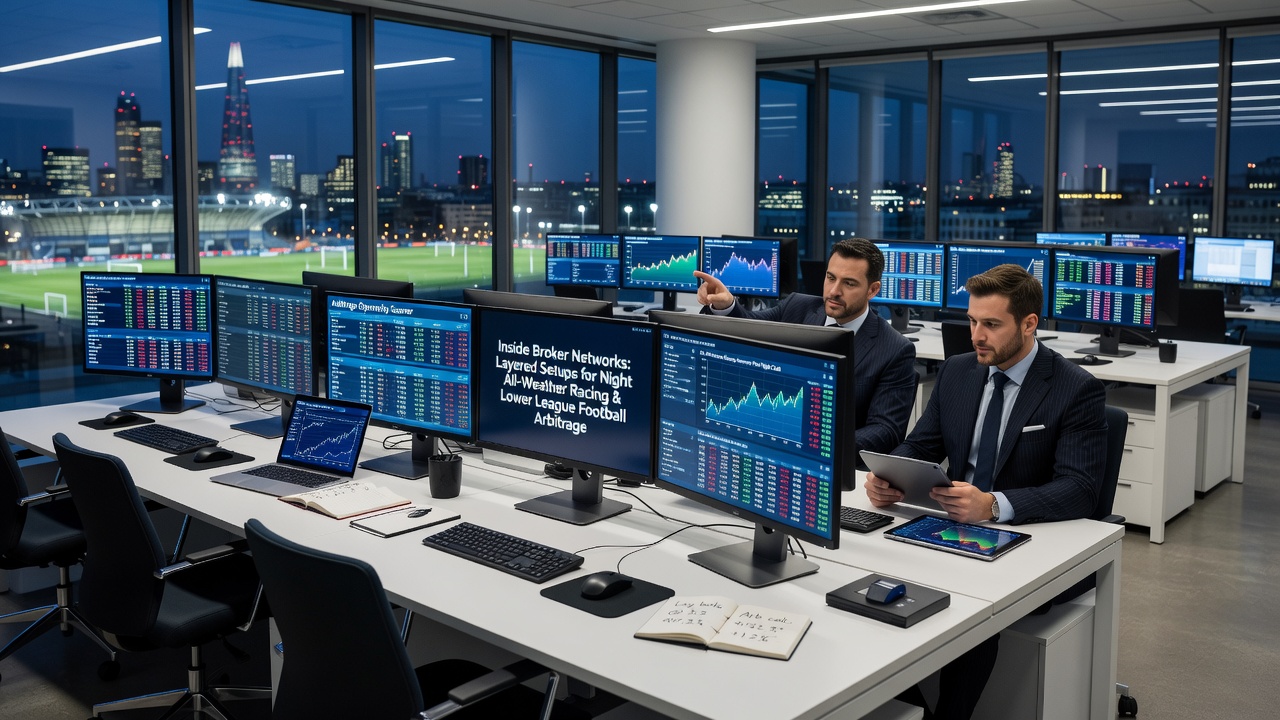
UK punters have developed structured approaches to access multiple betting platforms through broker networks, particularly for night all-weather racing events and lower league football matches where price discrepancies appear more frequently. These setups involve coordinating accounts across several providers to capture small margins before lines adjust, with activity concentrated on synthetic track meetings that run under floodlights and matches from leagues such as League Two or the National League.
Data from European betting markets shows that evening all-weather fixtures at venues like Wolverhampton and Kempton often feature thinner liquidity on certain exchanges, which creates opportunities when combined with traditional bookmaker odds. Observers note that punters layer their activity by routing wagers through intermediaries who hold direct access to sharp books, allowing simultaneous placement on opposing outcomes without triggering immediate account restrictions.
Core Elements of Multi-Account Configurations
Layered setups typically begin with a central broker account that connects to several offshore and domestic platforms, each assigned specific roles based on liquidity and payout speed. One account might handle the primary stake on a horse at enhanced morning prices while another mirrors the position on an exchange to lock in the differential, and a third absorbs any residual exposure if lines move during the race build-up. Researchers tracking transaction patterns have documented that these configurations often include contingency accounts held under separate verification details to maintain continuity if one provider applies limits mid-evening.
Lower league football presents a parallel structure where brokers facilitate access to Asian handicap markets and over-under totals that move rapidly after team news emerges. A single match in the EFL Trophy or National League South can generate multiple price shifts within the first fifteen minutes of play, prompting punters to split stakes across three or four platforms simultaneously. Figures from industry monitoring services indicate that such matches attract higher broker-assisted volume during August periods when new season pricing has yet to stabilise.
Technical Routing and Timing Mechanisms
Punters coordinate these layers through software that monitors live odds feeds and executes pre-defined sequences, often triggering within seconds of a price update on one platform. For night racing, the sequence frequently starts with a broker placing at a sharp book known for holding lines longer, followed by an exchange lay to neutralise risk before the off. Similar sequencing applies to lower league fixtures where in-play adjustments occur after substitutions or disciplinary events, allowing the layered structure to capture incremental edges across the ninety minutes plus stoppage time.

August 2026 has seen continued refinement of these timing protocols as new fixtures enter the calendar, with all-weather cards extending later into the evening and lower league schedules featuring midweek rounds that overlap with racing meetings. Accounts report increased use of automated alerts that flag when a broker's liquidity pool drops below a threshold, prompting immediate redistribution to secondary layers.
Risk Distribution Across Platforms
Effective layering requires distributing exposure so that no single provider sees concentrated activity that might prompt review. Brokers achieve this by splitting stakes into smaller parcels routed through affiliated accounts, each operating below typical monitoring thresholds. Studies of betting patterns reveal that successful configurations maintain at least four distinct channels for racing bets and five for football, with periodic rotation of which platform receives the initial stake to avoid pattern recognition.
Those who maintain these networks also incorporate periodic account resets, closing and reopening channels every few months to refresh verification trails. This practice aligns with observations from regulatory bodies in other jurisdictions, such as reports issued by the Alberta Gaming, Liquor and Cannabis Commission, which document similar account cycling behaviours in multi-jurisdiction betting environments.
Market Liquidity Considerations
Night all-weather racing draws thinner crowds compared with daytime turf meetings, resulting in wider spreads on certain runners that brokers can exploit when matched against exchange prices. Lower league football encounters comparable dynamics, particularly when matches involve teams with limited media coverage and therefore slower odds updates from smaller operators. Data compiled by the Portuguese Institute of Gaming highlights that such lower-profile events produce measurable price variances that persist longer than those in top-tier competitions.
Punters refine their broker selections by tracking historical payout reliability and speed of line movement rather than headline odds alone. A broker with direct Pinnacle connectivity might receive priority for football totals, while another with established exchange access handles the lay side for racing. These assignments shift seasonally as market conditions evolve, with August fixtures often requiring fresh calibration due to squad changes and track surface variations.
Conclusion
Broker networks supporting layered arbitrage in night all-weather racing and lower league football continue to evolve through incremental adjustments to account structures and timing protocols. Market participants distribute activity across multiple channels to capture discrepancies while managing exposure limits, with configurations adapting to fixture calendars and liquidity shifts. Available data from international regulatory and research sources indicates these practices remain concentrated in specific evening and midweek slots where pricing inefficiencies appear most consistently.