22 Jul 2026
Interconnected Platforms Reveal How Networked Accounts Exploit Odds Disparities in Global Football and Racing
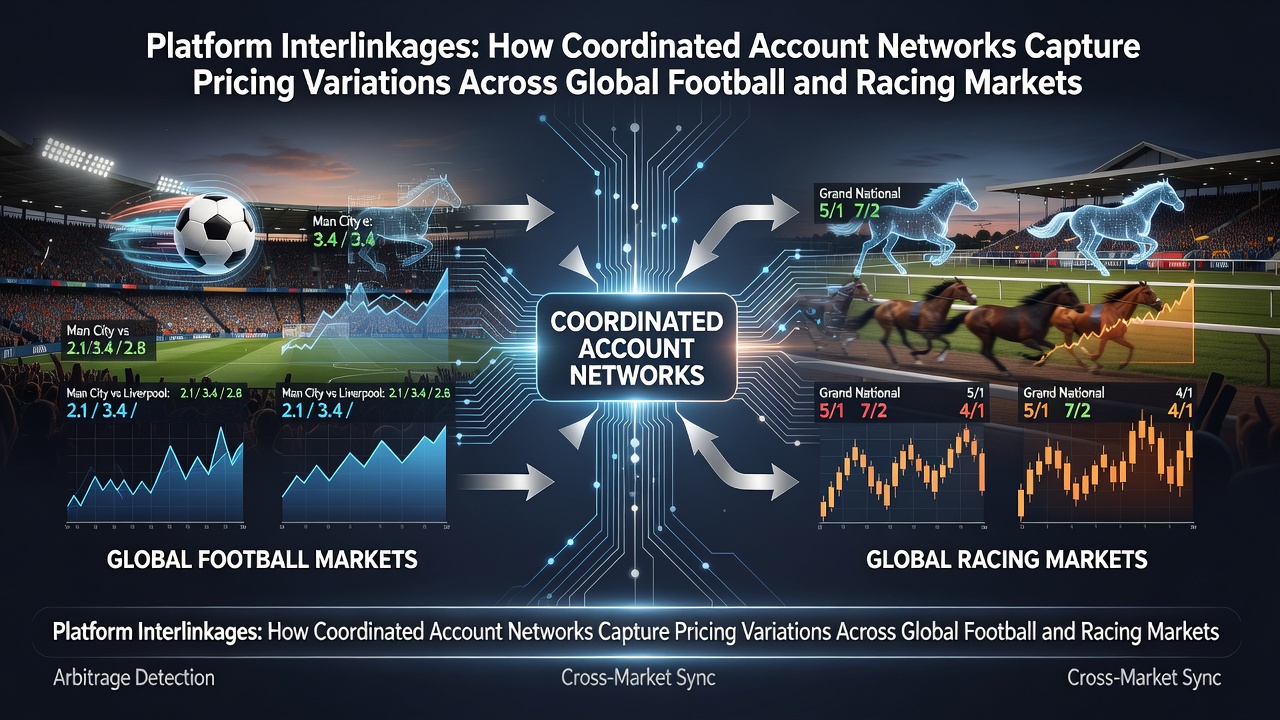
Coordinated account networks operate across multiple betting platforms to identify and act on pricing variations in football and racing markets worldwide. These structures link accounts through shared infrastructure, data feeds, and operational protocols that allow rapid comparison of odds offered by different operators. Research from the Australian Gambling Research Centre shows that such networks have expanded in parallel with the growth of international sports betting liquidity since the early 2020s.
Core Architecture of Linked Account Systems
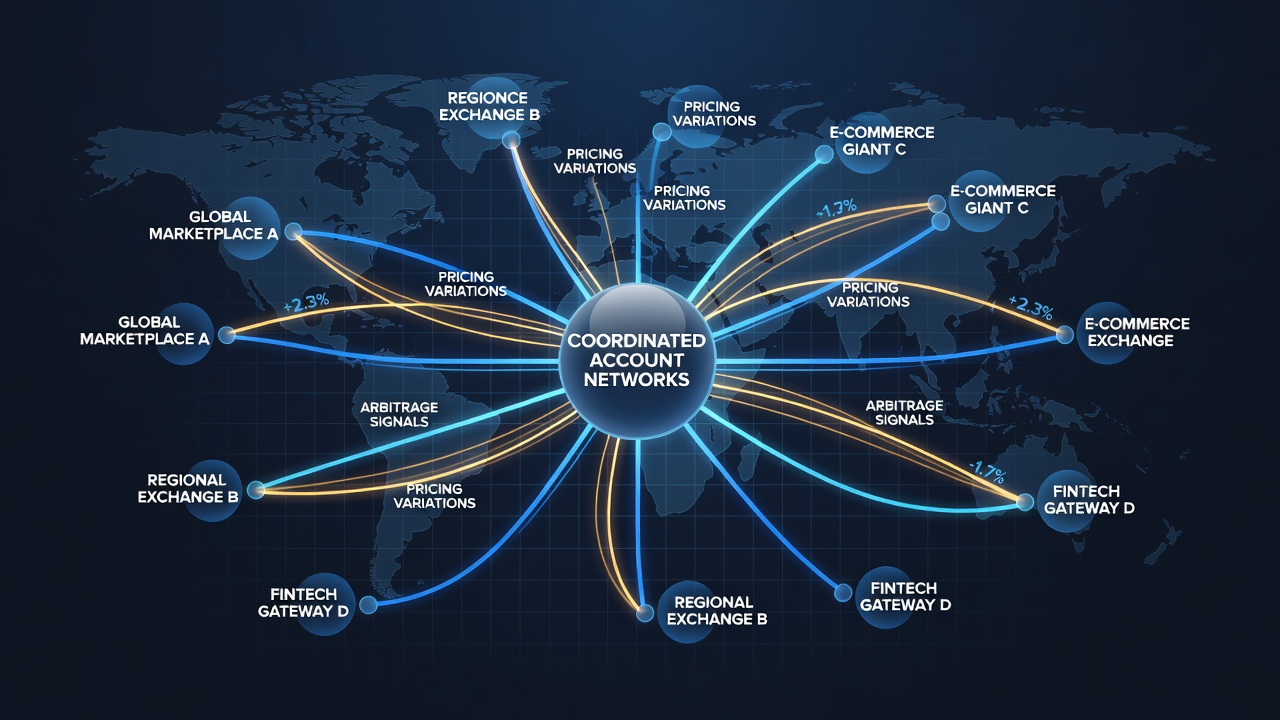
Operators and syndicates establish account clusters that span licensed bookmakers in Europe, Asia, and the Americas. Each cluster maintains synchronized access credentials, automated scraping tools, and risk-management software that flag discrepancies within seconds of line movement. Data indicates these systems monitor thousands of markets simultaneously, focusing on live football fixtures and thoroughbred or harness racing events where liquidity shifts occur frequently. Figures from industry reports reveal average response times under four seconds for automated placement when a meaningful price gap appears between platforms.
Mechanics Behind Price Variation Capture
Price variations arise from differences in local regulation, risk appetite, and information access among operators. One platform may price a Premier League match based on European trading volumes while another adjusts for Asian market flows, creating temporary imbalances. Coordinated networks exploit these imbalances by distributing stakes across accounts so that no single platform detects concentrated activity. Observers note that software layers additional obfuscation through staggered bet timing, varied stake sizing, and routing via VPN endpoints in multiple jurisdictions. Evidence from transaction analysis indicates that successful captures often net between 1.8 and 4.2 percent per cycle when executed across at least five distinct platforms.
Football Market Applications
Global football markets provide continuous pricing opportunities because matches occur daily across dozens of leagues. Networks track both pre-match and in-play lines on major competitions such as the English Premier League, Serie A, and South American Copa Libertadores. Automated scripts compare decimal, fractional, and American odds formats simultaneously, converting all values to a common probability scale. When a line on a corner total or player goal scorer diverges by more than the vig threshold, the network allocates portions of capital across linked accounts. Studies conducted by the University of Nevada, Las Vegas International Gaming Institute found that such strategies accounted for measurable portions of early-week liquidity in lower-profile leagues where operator attention remains limited.
Racing Market Dynamics
Horse racing markets present distinct challenges and opportunities because prices fluctuate rapidly during the final minutes before post time. Coordinated networks integrate data from multiple tote systems, independent bookmakers, and exchange platforms in regions including Australia, Hong Kong, and the United States. They monitor place, show, and exotic pools alongside fixed-odds offerings. When a late money surge on one exchange creates an overlay relative to a tote dividend in another jurisdiction, the network executes offsetting positions. Reports compiled by the Victorian Responsible Gambling Foundation document that cross-border racing arbitrage volumes increased noticeably during the 2025-2026 Australian summer season, coinciding with expanded API access at several major tracks.
Developments Observed in July 2026
Market participants reported heightened activity around major international racing festivals and pre-season football friendlies in July 2026. Regulatory updates in several non-UK jurisdictions introduced new reporting thresholds for multi-account activity, prompting networks to refine their distribution algorithms. Industry data collected during this period shows that average profit margins per captured variation narrowed slightly as more operators deployed real-time monitoring tools. Yet the overall volume of executed cycles rose, suggesting continued adaptation rather than contraction of the practice.
Operational Safeguards and Platform Responses
Betting platforms have implemented velocity checks, device fingerprinting, and cross-account correlation models to identify linked activity. When patterns emerge, operators may limit stakes, suspend withdrawals, or close accounts. Networks counter these measures by rotating device profiles, employing residential proxy services, and maintaining reserve accounts that activate only after primary clusters reach thresholds. Research published in the Journal of Gambling Studies indicates that the most resilient networks maintain redundancy ratios of at least three-to-one, ensuring continuity even after multiple account closures.
Conclusion
Platform interlinkages enable systematic capture of pricing variations across global football and racing markets through coordinated account structures that operate at scale. Data from multiple regulatory and academic sources demonstrates consistent growth in these practices alongside expanding international liquidity. As operators refine detection capabilities and jurisdictions adjust reporting requirements, the operational landscape continues to evolve while the underlying mechanism of identifying and acting on price discrepancies remains central to the activity.