15 Jun 2026
Cross-Platform Liquidity Mapping Techniques for Accumulator Construction in Domestic Soccer Leagues and National Hunt Seasons

Cross-platform liquidity mapping involves tracking available funds and odds movements across multiple betting exchanges and bookmakers to identify opportunities for accumulator construction. This process combines data from domestic soccer leagues with national hunt racing calendars, allowing systematic assembly of multi-leg bets where liquidity depth varies by market and timing. Observers note that liquidity mapping relies on real-time feeds from several operators, which reveal where volume concentrates during key fixtures and race meetings.
Core Elements of Liquidity Mapping
Researchers describe liquidity mapping as the practice of charting bid-ask spreads and available stakes on parallel platforms before placing correlated selections. In soccer, domestic league matches generate steady pre-match liquidity on major exchanges, while national hunt events see spikes around festival periods when jump races attract larger pools. Data indicates that operators publish depth charts showing stake limits at each price point, and those figures help determine whether an accumulator leg can be layered without shifting odds prematurely.
Analysts combine exchange order books with bookmaker price streams to build heat maps of where liquidity resides. These maps highlight periods when soccer accumulators benefit from overlaying lower-league matches onto higher-profile fixtures, whereas national hunt seasons require attention to handicap races that often carry thinner books early in the morning. Studies from international racing bodies show that mapping tools reduce execution slippage when stakes exceed standard retail limits.
Application in Domestic Soccer Leagues
Domestic soccer leagues supply consistent fixtures that suit accumulator layering because match schedules create overlapping liquidity windows across platforms. Builders start by identifying leagues with reliable data feeds, then map which exchanges offer the deepest markets on over/under totals or Asian handicaps. According to figures from the American Gaming Association, cross-border bettors increasingly route soccer selections through multiple accounts to capture small pricing discrepancies before they close. This approach supports construction of four- and five-leg accumulators where each leg draws from a different liquidity source.
Market participants track live in-play shifts separately from pre-match books, noting that certain lower-division games maintain steadier liquidity on specialist platforms. Mapping these patterns allows precise stake allocation so that the overall accumulator price remains stable until all legs are secured. Observers record that June 2026 data releases from several European research centers confirmed continued growth in multi-platform soccer volume during the close of domestic seasons.
Integration with National Hunt Seasons
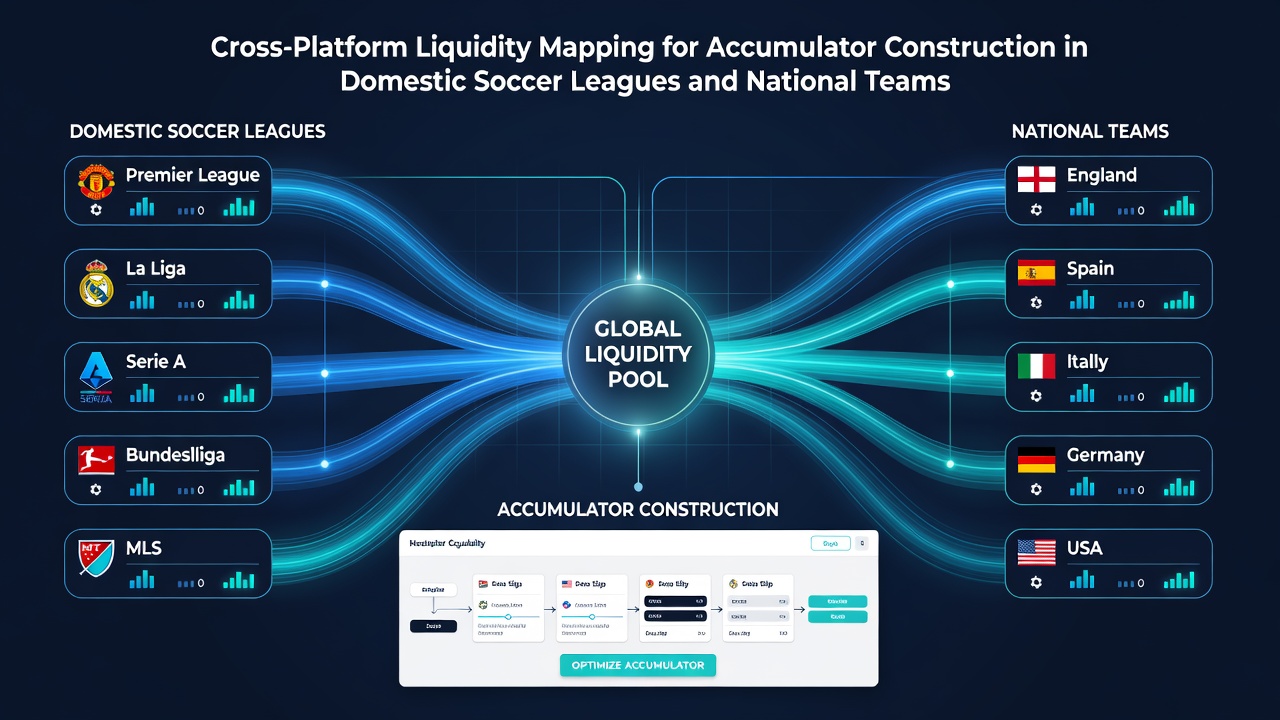
National hunt seasons introduce distinct liquidity rhythms tied to jumps racing calendars. Handlers of accumulators often blend soccer legs with selected chase and hurdle races where morning liquidity on exchanges can be thinner yet more predictable once declarations appear. Research from the Australian Gambling Research Centre indicates that cross-platform tools used in thoroughbred markets translate effectively to national hunt when operators publish comparable depth indicators.
Seasonal peaks around major meetings create concentrated liquidity pools that mapping software flags in advance. Accumulator constructors then time their entries to coincide with these windows, placing the racing leg first when exchange liquidity runs deepest. Subsequent soccer legs follow once the racing market stabilizes, preserving the overall price. Figures released in mid-2026 showed that operators handling both codes reported measurable increases in multi-leg activity when liquidity overlays were applied systematically.
Practical Construction Steps
Builders begin by exporting order-book snapshots from each platform into a unified dashboard. Filters isolate soccer matches and national hunt races that share similar liquidity profiles, then rank them by available depth at target prices. Once candidates are selected, the process moves to staged execution: the first leg locks in the highest-liquidity selection, after which subsequent legs fill from alternate sources to avoid single-platform limits.
Monitoring continues throughout the accumulator lifespan because in-play updates in soccer and late non-runners in jumps racing can alter remaining liquidity. Automated alerts notify when depth drops below preset thresholds, prompting partial hedging or early cash-out where permitted. Industry reports confirm that structured mapping reduces failed executions compared with ad-hoc placement across disconnected accounts.
Conclusion
Cross-platform liquidity mapping supplies a structured method for assembling accumulators that draw from both domestic soccer leagues and national hunt seasons. The technique relies on synchronized data streams and depth analysis rather than isolated platform usage. As markets evolve through 2026, participants continue to refine these mapping processes to match available liquidity windows across the two codes.