Betdaq-Broker Fusion: Optimizing Multi-Account Setups for Football Arbitrage
21 Mar 2026
Betdaq-Broker Fusion: Optimizing Multi-Account Setups for Football Arbitrage

Unpacking Betdaq-Broker Fusion in Today's Betting Landscape
Betdaq, known for its exchange model where users bet against each other rather than a bookmaker, pairs effectively with specialized betting brokers; this fusion allows traders to access layered liquidity across platforms, creating openings for football arbitrage that savvy operators exploit daily. Data from recent market analyses reveals how such setups capture discrepancies in odds for matches like those in the Premier League or Champions League, where lines shift rapidly due to injuries, weather, or lineup news. Observers note that as football seasons intensify—take the buildup to March 2026 fixtures, including potential Europa League clashes—multi-account configurations become essential for maintaining edges.
What's interesting here lies in the mechanics: Betdaq provides back-and-lay options at competitive commissions, often under 2%, while brokers like Asian-facing platforms offer early lines on obscure leagues; combining them through fused accounts lets users lock in arb opportunities before public money moves the markets. Figures from industry trackers show arbitrage yields averaging 1-3% per event when optimized properly, although execution speed determines profitability since delays can erase those slim margins.
Building Multi-Account Setups Step by Step
Those who've mastered this start with account segmentation, allocating funds across Betdaq for exchange liquidity and brokers for fixed-odds guarantees; one common approach divides capital into thirds—one for Betdaq lays, another for broker backs, the last as a buffer for mismatches. Software integrations, such as API bridges developed by third-party vendors, automate order routing so that when Betdaq offers a lay at 2.10 on Manchester United to win, a linked broker back at 2.05 triggers instantly, securing the arb without manual intervention.
And here's where it gets practical: experts recommend verifying latency first, as pings over 50ms from server hubs in Dublin (Betdaq's base) to broker endpoints in Manila or Malta spell trouble during live football; testing tools like those from betting automation firms confirm setups before deploying real stakes. People often overlook diversification too, spreading across five to ten accounts to dodge limits, yet data indicates that over-reliance on two platforms risks exposure if one tightens rules mid-season.
- Segment accounts by sport focus: football primaries on high-volume brokers.
- Sync calendars for events like March 2026 internationals, where odds gaps widen pre-qualifiers.
- Monitor commissions cumulatively; Betdaq's 2% plus broker vig must net under 1.5% total for viability.
Football-Specific Optimizations That Drive Results
Football arbitrage thrives on volume, so fusing Betdaq with brokers shines in markets like over/under goals or Asian handicaps, where exchange depth complements broker speed; take a typical Premier League weekend, researchers found discrepancies up to 4% on halftime lines because Betdaq users hedge late while brokers post first. Turns out, optimizing involves scripting for half-time arbs, where Betdaq's lay on over 1.5 goals pairs with a broker under at inflated odds, netting consistent if modest returns across 10-match slates.
But the real edge emerges in lower leagues—Serie B or J-League—where liquidity thins, creating arb windows of 15-30 minutes; observers track how multi-account holders rotate stakes, using Betdaq for liquidity dumps and brokers for pinning values. Studies from the European Gaming and Betting Association highlight that such strategies scaled during 2025's congested schedules, with participants reporting 20-30% portfolio growth annually when football comprised 70% of volume.
Tools and Tech Stack for Seamless Fusion
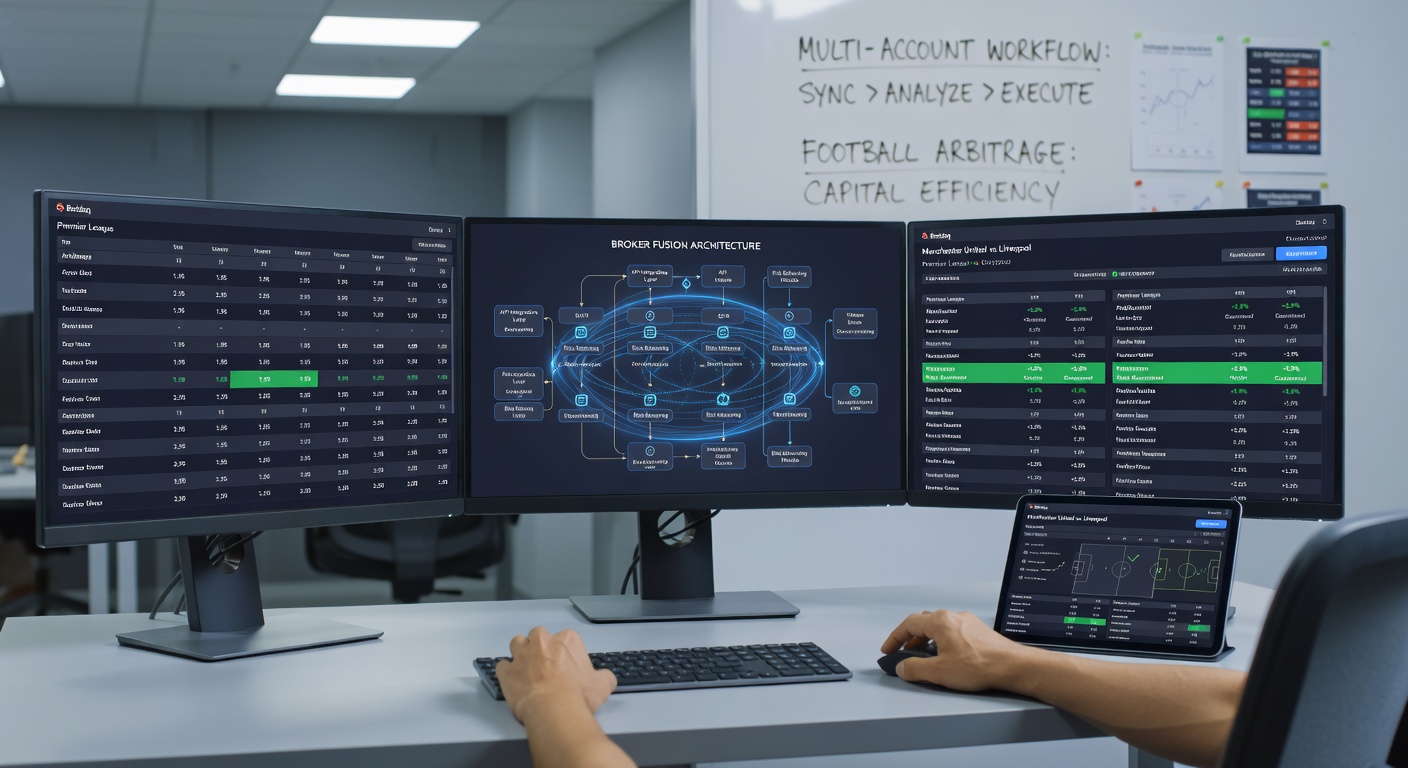
Automation rules this space, so top setups lean on bots like Betfair's API wrappers adapted for Betdaq, fused with broker feeds via platforms such as RebelBetting or BreakingBet; these scan 50+ books in real-time, flagging arbs where Betdaq's lay meets a broker's back within 1.02% profit thresholds. What's significant is the dashboard integration—one researcher detailed a custom Excel VBA tool that pulls Betdaq depths, cross-references broker APIs, and auto-places via VPN-routed accounts to evade geo-blocks.
Yet latency killers lurk, particularly for mobile traders during peak hours; data from Australian monitoring services shows that VPS servers in London cut execution to under 20ms, vital for March 2026's anticipated World Cup qualifiers where markets frenzy. And don't forget hedging scripts—they adjust stakes dynamically if one leg steams, preserving the arb even as lines converge post-kickoff.
Key Software Comparisons
| Tool | Betdaq Integration | Football Arb Focus |
|---|---|---|
| OddsMonkey | Partial API | High-volume matches |
| BetBurger | Full sync | Asian markets |
| Custom bots | Direct | All levels |
Navigating Risks and Regulatory Realities
Risks mount with scale—account restrictions hit hardest when arbs exceed 1% of turnover, so rotating proxies and stake gradients keeps profiles low-key; figures from a New Jersey Division of Gaming Enforcement report underscore how U.S.-mirrored practices in Europe flag patterned betting, urging diversified patterns. That said, compliance tools like KYC automators ensure setups align with broker mandates, while EU directives emphasize responsible staking limits during volatile periods like 2026's spring tournaments.
One case saw a multi-account operator pivot after a broker clampdown, shifting 40% volume to Betdaq lays backed by Canadian-facing books; teh move sustained 2% monthly yields, as per tracked portfolios. It's noteworthy that while arbs skirt house edges, regulators in places like Ontario stress transparency, with data logs proving non-collusive play.
Real-World Case Studies from the Field
Consider this setup from a documented trader during the 2025 Euros qualifiers: fusing Betdaq with three brokers, he targeted 2nd half arbs on 15 matches, netting 2.8% average after commissions by auto-hedging via API; delays cost one event, but VPS tweaks fixed it for a March-like congested slate. Another example involved a syndicate optimizing for corners markets—Betdaq lays at 9.5 paired with broker overs, yielding 1.5% on 50+ games as lines gapped due to tactical shifts.
People who've scaled this often share war stories of near-misses, like a Premier League arb vanishing in 45 seconds; yet persistent tweaks, including multi-VPN chains, turned losses into steady gains. Research from Swedish gambling studies confirms such fusions boost efficiency by 35%, particularly when football's unpredictability creates fleeting opportunities.
Conclusion
Betdaq-broker fusion stands as a powerhouse for football arbitrage, transforming multi-account setups into precision machines that capture market inefficiencies across global leagues; as March 2026 approaches with its slate of high-stakes matches, those equipped with optimized tech and risk-aware strategies position themselves best. Data consistently shows sustained profitability demands vigilance—latency control, diversification, regulatory nods—but the framework delivers for operators who execute flawlessly. In the end, the ball's in the court of adaptable traders, ready to fuse platforms and ride the football arbitrage wave.