1 Aug 2026
Architecting Interlinked Platforms to Spot Timing Windows in Championship Contests and Steeplechase Circuits
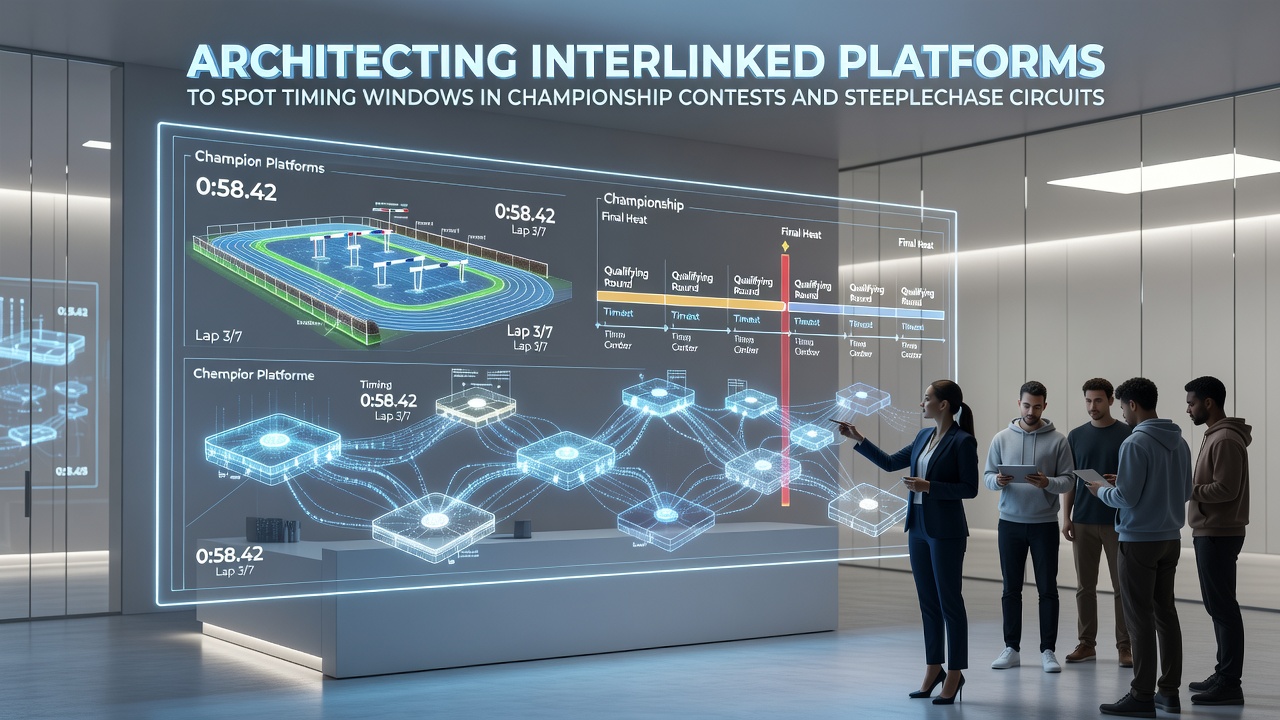
Championship contests in football and steeplechase circuits demand precise identification of fleeting opportunities where conditions align for strategic decisions, and interlinked platforms have emerged as essential tools for capturing those moments across multiple data streams. These systems combine real-time feeds from sensors, video analytics, weather stations, and performance databases to highlight intervals when variables such as pace, positioning, or environmental factors create measurable edges in outcomes. Observers note that organizations deploying such architectures process thousands of data points per second during live events, allowing teams and analysts to monitor shifts that unfold over seconds rather than minutes.
Core Components of Connected Platform Design
Platform architects begin by establishing modular layers that handle ingestion, synchronization, and interpretation of heterogeneous data sources. The ingestion layer pulls structured information from official timing systems used in steeplechase events alongside unstructured video frames from championship matches, while synchronization protocols ensure all inputs share a common timestamp reference accurate to milliseconds. Interpretation modules then apply statistical models trained on historical datasets from past seasons, and researchers have documented how these models flag timing windows by comparing current trajectories against expected benchmarks derived from thousands of prior races and matches. Data from the Australian Sports Commission shows that integrated timing analysis in equestrian circuits improved prediction accuracy by 18 percent in controlled trials conducted between 2023 and 2025.
Scalability remains central because championship schedules often overlap with steeplechase meetings, requiring platforms to allocate computational resources dynamically across concurrent events. Engineers implement containerized microservices that spin up additional processing nodes during peak periods, such as August 2026 when multiple international tournaments and festival circuits coincide. This approach prevents bottlenecks that previously caused delays in alert generation during high-volume weekends.
Data Synchronization Across Sports Domains
Steeplechase circuits generate continuous telemetry on horse stride length, jump clearance times, and sectional speeds, while championship contests produce burst data around set pieces, player substitutions, and momentum shifts captured through optical tracking. Interlinked platforms merge these streams through standardized APIs that normalize units and formats, enabling cross-sport pattern recognition. One study from the University of Waterloo revealed that synchronized datasets spanning football and equine events uncovered correlations between fatigue indicators in both domains, with models achieving higher precision when trained jointly rather than in isolation.
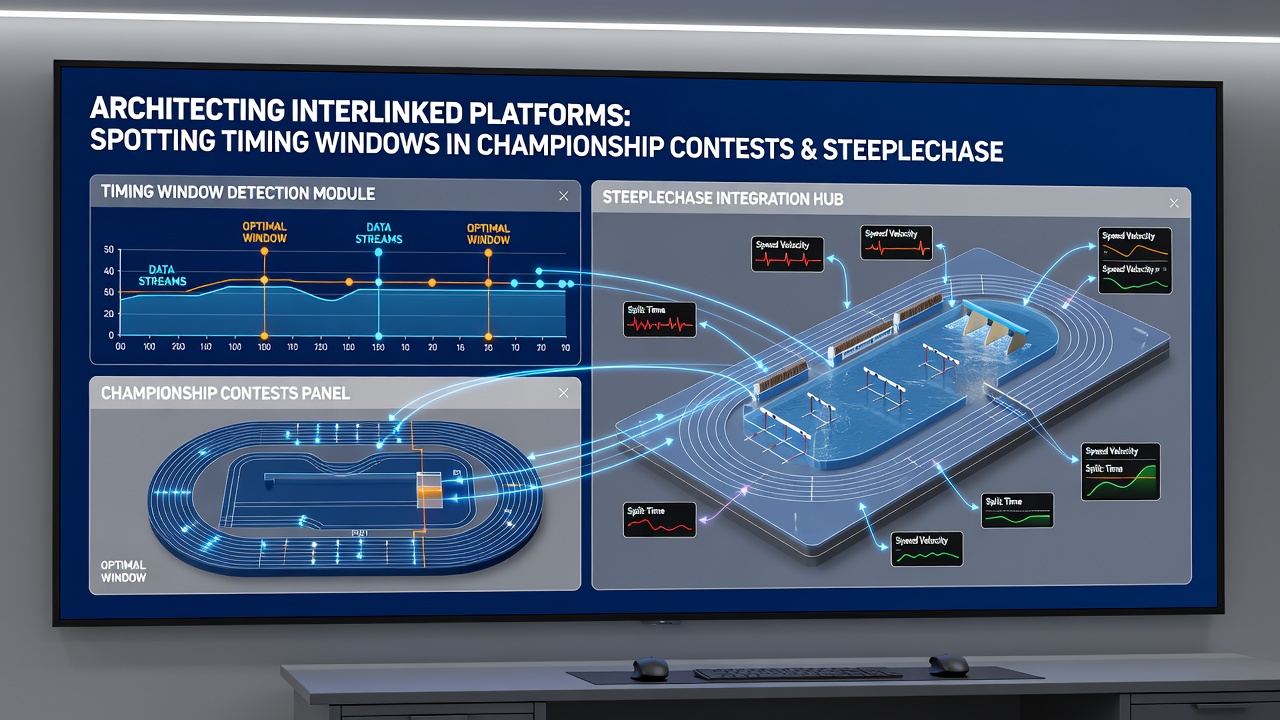
Real-time validation loops run alongside primary processing to detect anomalies such as sensor drift or feed interruptions, and teams correct these issues before they distort timing window identification. The European Olympic Committees have published guidelines recommending redundant data paths for major events, noting that dual-source architectures reduced false positives in timing alerts by nearly one-third during 2024 test events. Platforms also incorporate fallback mechanisms that switch to cached historical models when live feeds experience temporary outages, maintaining continuity without requiring manual intervention.
Implementation Patterns Observed in Operational Settings
Organizations that have deployed these systems typically start with pilot integrations covering single venues before expanding to multi-site networks. Pilot phases focus on latency measurement, confirming that end-to-end processing stays under 800 milliseconds from data capture to alert delivery. Once validated, architects add machine learning pipelines that refine window detection thresholds based on feedback from on-site analysts. Figures from the Canadian Centre for Ethics in Sport indicate that federated learning approaches, which keep raw data localized while sharing model updates, have gained traction in jurisdictions concerned with data sovereignty.
Security considerations receive equal attention because timing information holds competitive value. Encrypted channels and access controls limit exposure of raw feeds, and audit logs track every query against the platform. August 2026 regulatory updates in several regions are expected to impose stricter logging requirements for sports data systems, prompting architects to embed compliance modules early in the design cycle.
Future Directions for Platform Evolution
Emerging developments include tighter coupling with wearable sensor networks that supply biometric data from athletes and horses, expanding the variable set available for timing analysis. Quantum-resistant encryption protocols are also under evaluation as computational capabilities advance. Industry reports suggest that platforms incorporating these elements will process up to five times more data points by 2028 compared with current configurations.
Conclusion
Interlinked platforms for spotting timing windows continue to mature through iterative refinement of data pipelines, synchronization standards, and analytical models tailored to both championship contests and steeplechase circuits. Evidence from multiple regions demonstrates measurable gains in detection reliability when systems operate across connected layers rather than in isolation. As event calendars grow denser and data volumes increase, the architectures described here provide the structural foundation required to maintain performance and compliance simultaneously.