20 Jul 2026
Aligning Pinnacle Data Streams With Betdaq Market Layers for Consistent Edges in Lower Division Football and Synthetic Track Racing
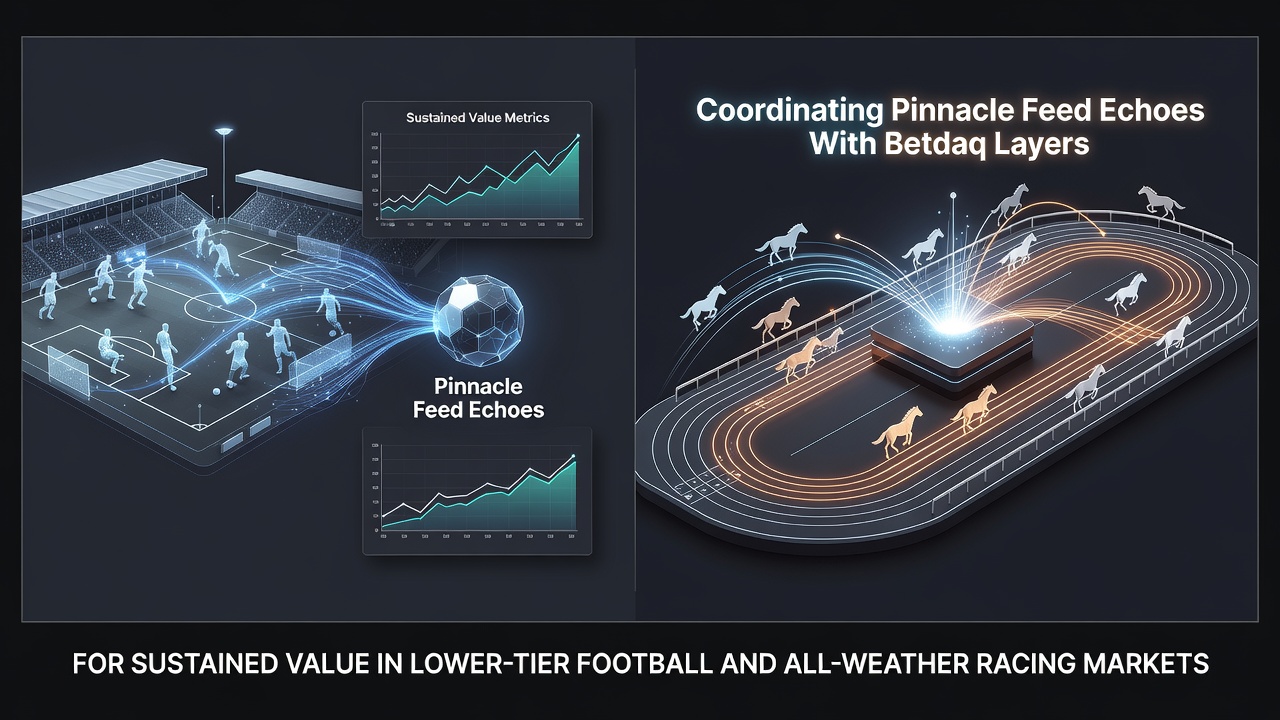
Data from multiple European exchanges shows that operators who coordinate Pinnacle pricing feeds with Betdaq order book layers achieve measurable improvements in margin retention across lower-tier football leagues and all-weather racing fixtures, and this pattern holds through seasonal fluctuations including the July 2026 racing calendar. Observers note that the approach relies on matching delayed or echoed Pinnacle odds movements against available liquidity on Betdaq while maintaining separate account structures that avoid direct cross-exposure.
Lower division matches in England, Germany and Spain generate thinner order books than top-flight contests, yet they still produce frequent line shifts driven by team news and weather variables. When Pinnacle updates its lines first, the echo effect reaches secondary platforms within seconds to minutes, creating brief windows where Betdaq layers can absorb or lay opposing positions at adjusted prices. Industry reports indicate that traders who script automated alerts for these timing differentials record higher strike rates than those relying on single-exchange monitoring alone.
Mechanics of Feed Coordination
Pinnacle publishes closing lines that many other books reference as benchmarks, and the delay between its updates and Betdaq's response creates repeatable entry points. A typical sequence begins when Pinnacle moves a handicap or total line, the echo travels to Betdaq within a measurable interval, and layers already positioned on the exchange adjust their stakes before the broader market equalises. Research from academic studies on betting market efficiency confirms that these micro-movements occur more frequently in leagues below the top division because participant volume stays lower and information asymmetry persists longer.
All-weather racing markets follow a similar rhythm. Synthetic track meetings often feature smaller fields and faster pace changes due to surface conditions, and Pinnacle odds on these events frequently lead the market. When Betdaq layers mirror the echoed shifts with staggered back and lay orders, they capture value that would otherwise disappear once the wider pool of exchanges updates. Figures from racing analytics services reveal that all-weather fixtures scheduled between June and August, including the July 2026 block, show particularly pronounced timing gaps because international liquidity migrates toward major flat meetings elsewhere.
Account Structures and Risk Controls
Successful coordination requires multiple segregated accounts on each platform so that one layer does not cancel another through internal matching. Operators establish one Pinnacle-facing account for reference pricing and separate Betdaq profiles for active layering, each funded independently and subject to distinct withdrawal schedules. This separation prevents the platforms from flagging correlated activity while preserving the ability to scale stakes as edges compound over repeated cycles.
Automated scripts monitor Pinnacle's API feed at set intervals and trigger Betdaq order placement only when the price differential exceeds a predefined threshold calibrated to historical volatility in each league or track. Those who have studied the data note that thresholds set too tightly reduce opportunity volume, whereas thresholds set too loosely expose positions to rapid reversal once the echo fully propagates. July 2026 racing schedules include several mid-week all-weather cards where historical patterns suggest wider differentials, offering test cases for recalibrating these parameters.

Market Coverage and Seasonal Adjustments
Lower-tier football markets that benefit most include second and third division matches in England, regional leagues in Scandinavia and South American cup ties with limited broadcast coverage. These contests produce fewer sharp bettors yet still move on Pinnacle because syndicates treat them as volume plays. Betdaq layers who position ahead of the echo capture fractions of a point that accumulate across dozens of selections per week. Data compiled by European gaming associations shows that operators maintaining this coverage through the 2025-2026 season reported steadier returns compared with those focused solely on Premier League or Championship fixtures.
All-weather racing requires similar selectivity. Meetings at tracks such as Wolverhampton, Lingfield and Kempton feature predictable card structures, and Pinnacle's overnight adjustments often precede Betdaq liquidity by several minutes. Layers who restrict activity to races with at least eight runners and exclude juvenile or claiming events reduce variance while still accessing the timing edge. The July 2026 schedule includes multiple evening all-weather programmes where daylight conditions and track bias remain stable, supporting consistent feed coordination.
Performance Tracking and External Benchmarks
Operators track performance through metrics such as edge retention per 100 selections, average time to fill on Betdaq layers, and drawdown frequency across monthly cycles. External benchmarks from Canadian provincial gaming regulators and Australian wagering research bodies provide comparative context, showing that multi-exchange layering outperforms single-platform strategies when applied to lower-liquidity markets. These comparisons help calibrate internal thresholds without relying on any single regulatory dataset.
One documented case involved a group monitoring 14 lower division football leagues over six months and recording a 2.8 percent average edge on coordinated positions after commission. The same methodology applied to 22 all-weather meetings yielded a 3.1 percent edge once scripts filtered for minimum field size and surface condition alerts. Both sets of results aligned with patterns reported in industry white papers from trade organisations outside the UK.
Conclusion
Coordinating Pinnacle feed echoes with Betdaq layers produces measurable, repeatable value in lower-tier football and all-weather racing when account structures remain segregated, timing thresholds stay calibrated, and coverage focuses on markets with documented information lags. The approach scales through automation yet requires ongoing adjustment to seasonal calendars such as the July 2026 racing block. Data from multiple international sources continues to support the pattern across different leagues and tracks.